Argentina is a vibrant and diverse country spanning over a million square miles. It boasts the largest Spanish-speaking population, created the tango, and is home to the breathtaking Iguazu Falls. Plus, it’s a major wine producer!
Our 6 Week Argentina Adventure: From the North to the End of the World
We couldn’t believe how beautiful and diverse the landscapes of Argentina were. We travelled from Salta way up in the North to way down in the South, Ushuaia (World’s End), experiencing everything that Argentina had to offer. And it really is true what they say about the lifestyle of Argentinians — they love a VERY late dinner. Midnight wasn’t unusual while staying with family in Buenos Aires, and neither was a three-hour drive to a restaurant. The menu? Meat, meat, meat… and wine. After just one week even I was craving a salad.
Our adventure began the moment we crossed over from Chile — and honestly, the journey itself set the tone for everything that followed.
Mendoza: Wine, Steak & The Andes
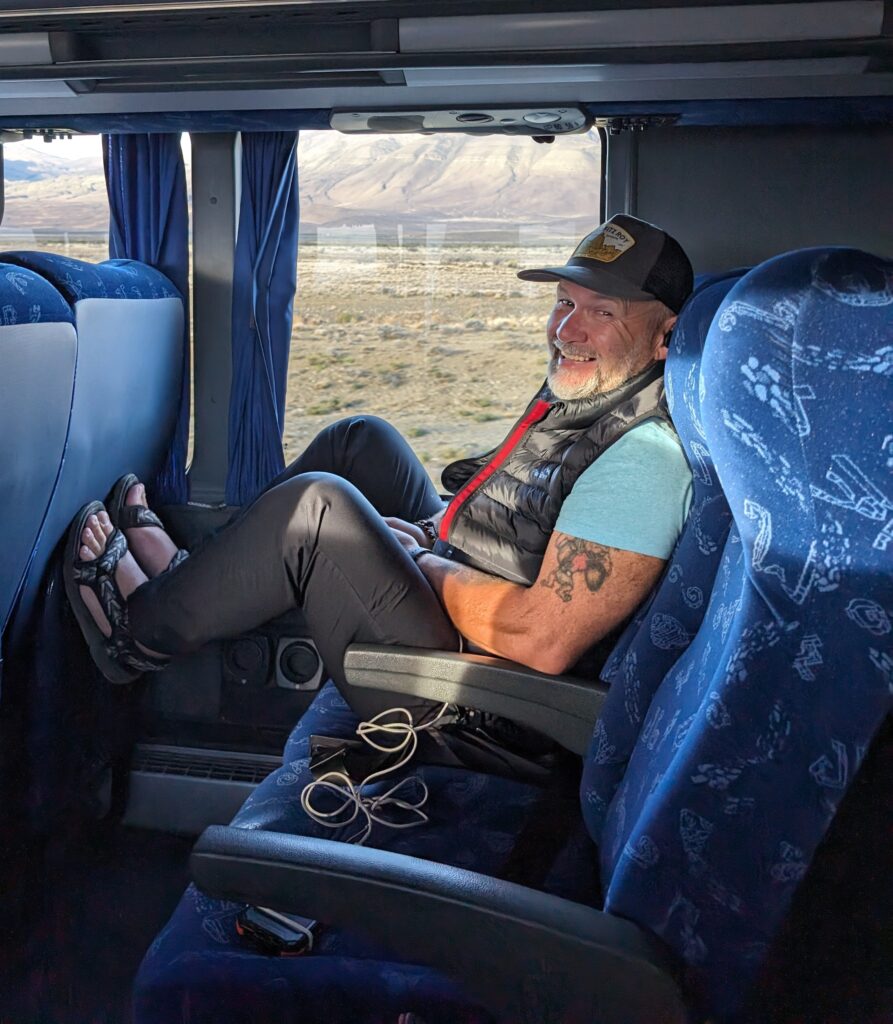
We left Santiago and took a 9-hour bus ride over the Andes — a route full of dramatic switchbacks, snow-dusted peaks, and the occasional “are we actually supposed to be this close to the edge?” moment. Equal parts terrifying and incredible.
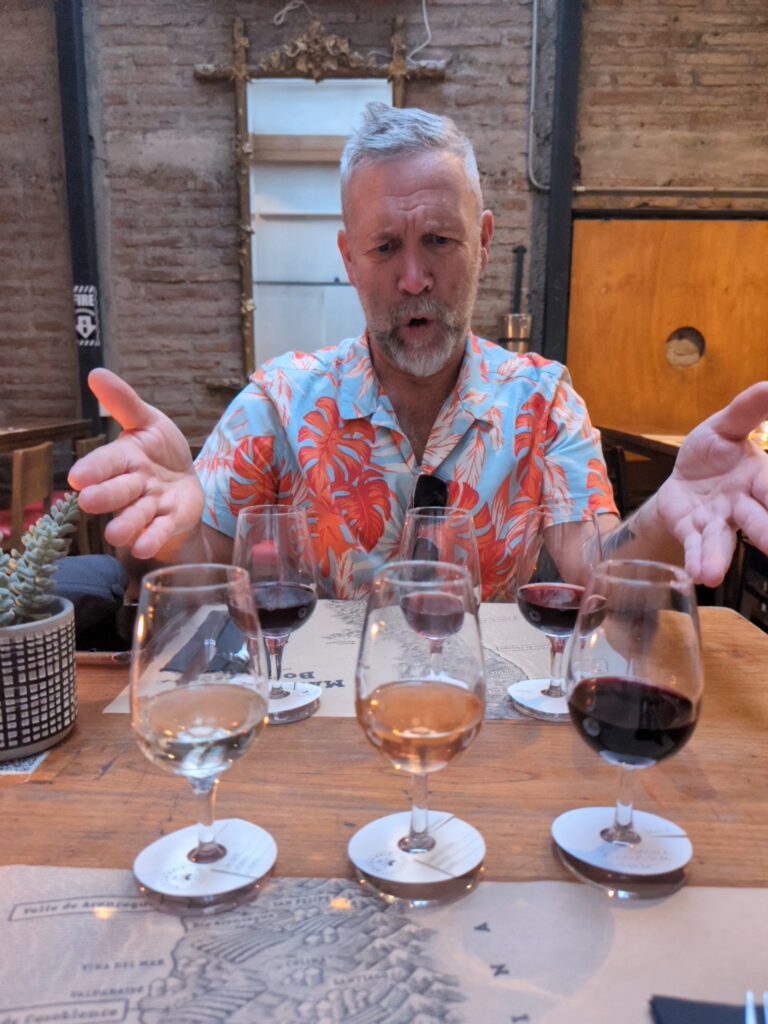
By the time we rolled into Mendoza, we were more than ready for wine and steaks — and we were not disappointed. We tasted the best Malbec of our lives, poured on draft like it was the most normal thing in the world. It didn’t even have a name — just “Malbec” — but honestly, it didn’t need one. That wine now exist only as a perfect memory we’ll carry forever. Its pretty much a good enough reason to return to Mendoza 😊
Salta & Jujuy: Colour, Culture & Salt Flats
From Mendoza, we headed north to Salta for Christmas. Nicknamed “La Linda” (The Beautiful), Salta is known for its perfectly preserved colonial buildings, cobblestone streets, pretty plazas, and some of the best empanadas in Argentina — empanadas salteñas: small, juicy, filled with beef, onions, and a hint of cumin. Delish.
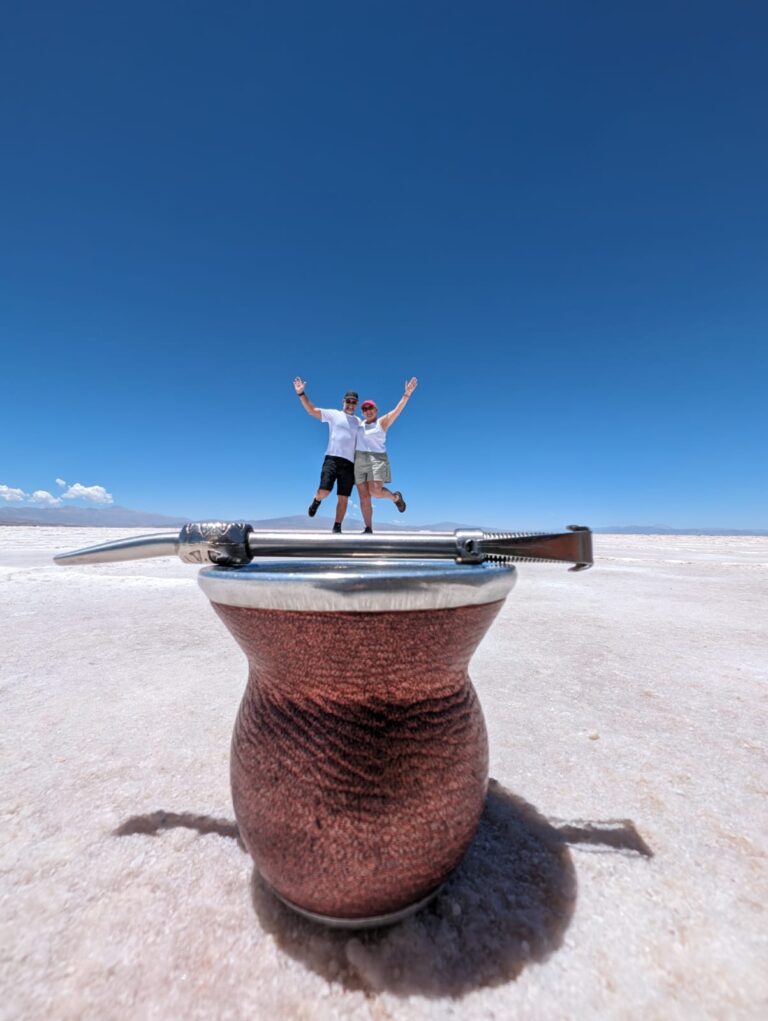
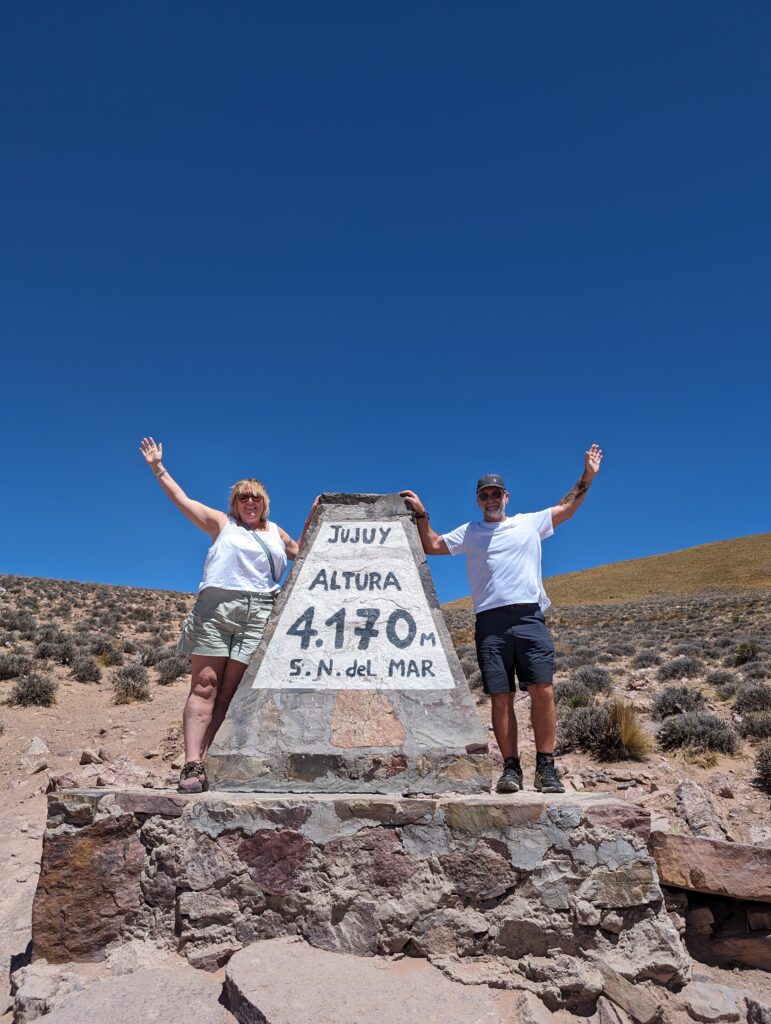
We also took a 14-hour day trip into the Jujuy region to see the Hill of Seven Colours, followed by the breathtaking Salinas Grandes, the massive salt flats shared between Salta and Jujuy. Endless bright-white salt stretched out in every direction, with mountains in the distance. It felt like standing on a giant mirror. And of course we took the classic perspective photos — because how could you not?
Tigre, Buenos Aires: Family, Food & A Near-Disaster
After Salta, we headed to Tigre in Buenos Aires to join my sister, brother-in-law Guille, and his family for New Year’s. We ended up staying for three weeks — long enough to settle in, relax, and sink into everyday Argentine life. From the moment we arrived, we were made to feel completely at home.
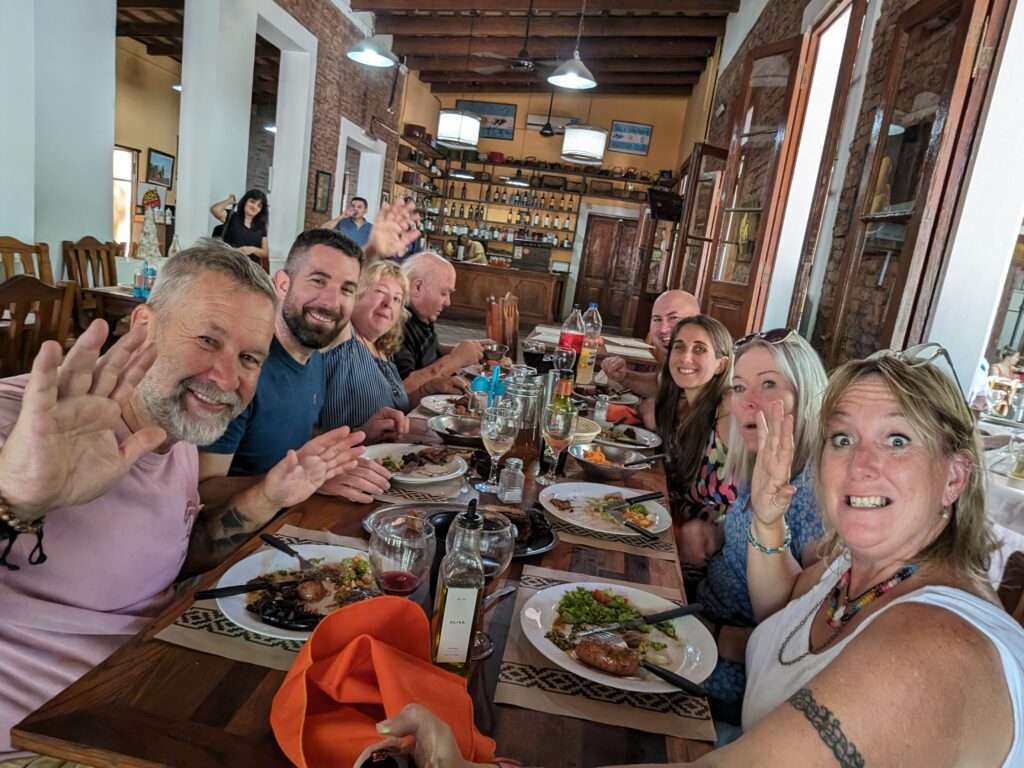
Those three weeks were full of long, lazy lunches that somehow stretched into late evenings, spontaneous gatherings with friends, and family. They introduced us to their favourite foods, shared their local spots, and gave us a glimpse of real life in Tigre. Amazing… and exhausting 😊
This is also where our adventure almost came to a very abrupt end. I somehow managed to put my passport through the washing machine — not just once… but TWICE. One moment it was fine, and the next it was spinning around the drum like a sock. I was absolutely distraught.
After two days of carefully placing paper towels between every page, stacking heavy books on top, and then nervously visiting the airport to make sure the chip hadn’t died… we were finally rockin’ n’ rollin’ and back on the road again.
Ushuaia: The End of the World
Next, we swapped the chaos of city life for Ushuaia — the southernmost city on the planet, perched at El Fin del Mundo (The End of the World). And stepping off the plane, it really did feel like we’d arrived at the edge of something huge. Snow-capped mountains rose straight out of the water, icy winds swept in from the south, and colourful houses dotted the hillsides like a tiny outpost clinging to Patagonia.
Because it’s the gateway to Antarctica, expedition ships were constantly coming and going, adding this quiet sense of adventure to every day we were there — like everyone was preparing for some great journey.
During our time in Ushuaia, we packed in as much as we could:
We hiked through Tierra del Fuego National Park, surrounded by forests, lakes, and mountains.
Took a boat trip along the Beagle Channel to watch penguins, sea lions, and incredible birdlife.
Visited Faro Les Éclaireurs, the famous “End of the World” lighthouse.
Explored the quirky old prison and maritime museum, which was far more interesting than we expected.
Held on for dear life during a chaotic, bumpy, and ridiculously fun 4×4 jeep tour.
And of course, we tried the local restaurants — fresh seafood, king crab, and warming Patagonia dishes that hit the spot in the cold.
Ushuaia felt dramatic, remote, and completely unforgettable. It’s the sort of place that makes you realise just how big the world is — and how lucky we were to experience a corner of it like this.
El Chaltén: Fitz Roy Views (and No Hiking for Me)
From Ushuaia, we headed north into Patagonia and arrived in El Chaltén — a tiny mountain village that hikers basically worship. It’s quiet, cosy, and wrapped in snow-capped peaks on all sides. Honestly, it looks like it was built to be on the front of a Patagonia brochure.
We checked into a small hostel (private room and bathroom, naturally), and when the clouds disappeared, we had a view of Mount Fitz Roy — one of the most iconic mountains in the region. Amazing!
I wasn’t feeling great and my knee wasn’t cooperating, so hiking wasn’t happening for me….. Shame! Nick went out for a couple of shorter walks to take in the scenery — nothing too hardcore — and came back saying even the “easy” trails were stunning. Meanwhile, I got to rest up and enjoy the relaxed atmosphere of the village, which really wasn’t a bad place to slow down for a bit.
El Calafate: Perito Moreno Glacier
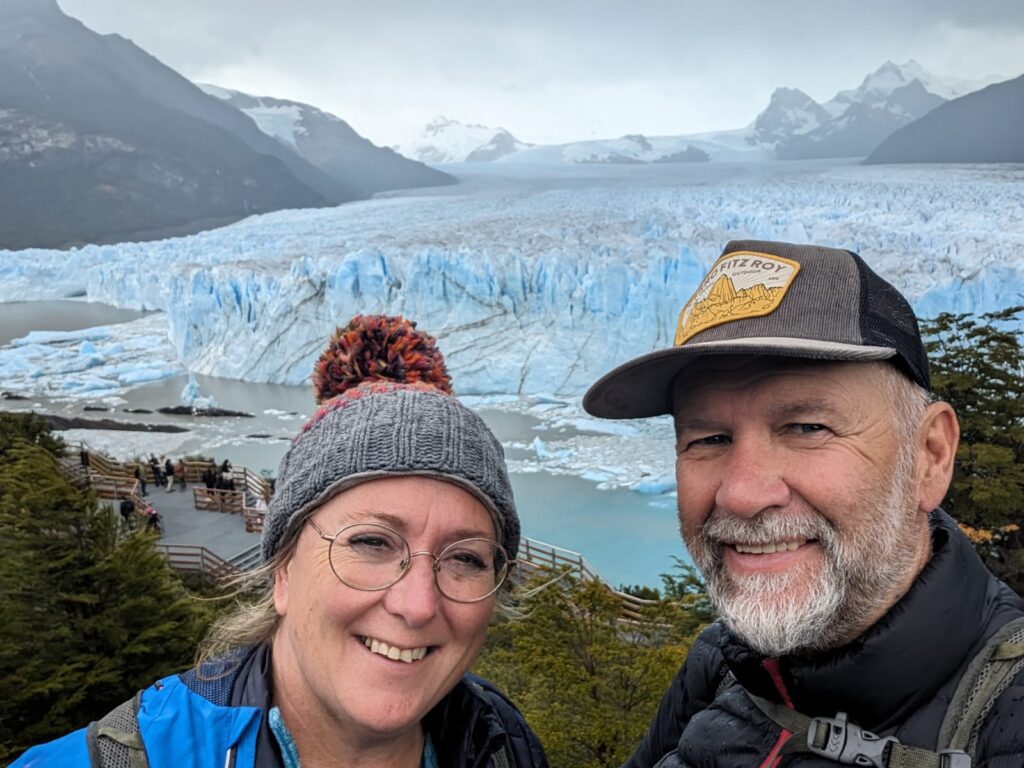
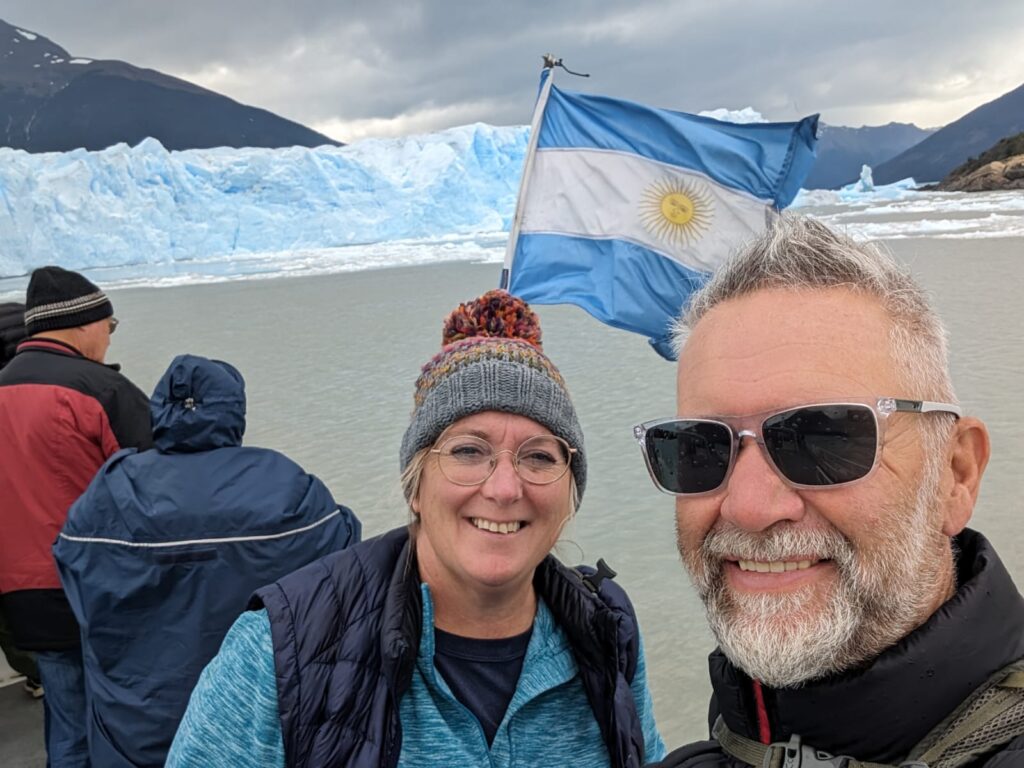
From El Chaltén, Nick pretty much dragged me onwards to El Calafate — home of the famous Perito Moreno Glacier. Even though I still wasn’t feeling the love, seeing that massive, electric-blue wall of ice instantly made the journey worth it. It’s huge, powerful, and honestly one of the most impressive sights in Patagonia.
We walked the viewing platforms and took a boat trip so Nick could get his “National Geographic moment.” We stood there with the camera ready, waiting for a dramatic chunk of ice to fall… but nope. Just a few splashes! Still, hearing the glacier crack and groan and standing beneath that 70-metre-tall wall of ice was unforgettable.
El Calafate was the perfect finale to our Patagonia chapter — dramatic, icy, beautiful, and completely worth the journey.
Final Thoughts.....
This trip through Argentina gave us more than we expected — new experiences, new challenges, and moments we’ll never forget. Every region felt like its own story, and together they made one incredible journey. We left feeling grateful, inspired, and already wishing we had just a little more time. Argentina, we will be back….
Quick Travel Tips
Good To Know For 1st Time Visitors
CAPITOL – Buenos Aires
OFFICIAL LANGUAGE – Spanish
POPULATION – 4.7 MILLION
VISA REQUIRED – As a British passport holder visiting Argentina for less than 90 days, a visa is not required.
TIME ZONE – Buenos Aires, Argentina (UTC-3)
- CURRENCY – Argentina Peso – BUT BE WARNED
the exchange rate changes faster than you can say “malbec”, so always double-check.
Withdrawing from ATMs isn’t recommended because you can only get a maximum of £10 with an £8 fee. Instead, take Euros or USD (crisp $100 bills are best) for exchange. It is always good to carry some cash but we pretty much paid for everything by card.
BEST TIME TO VISIT – Spring (Sept–Nov) & Autumn (Mar–May) for perfect temps; summer for Patagonia.
- Argentina is HUGE!!! – Don’t try to see everything in one trip unless you enjoy airports more than sightseeing.
- BUDGET TIP – Cash is king. ATMs often have low limits and high fees.
Getting There
International flights land in Ezeiza (EZE) near Buenos Aires. Domestic travel is easy but distances are long — sometimes a 2-hour flight replaces a 30-hour bus ride.
What To Eat & Drink
Asado: Argentina’s legendary barbecue
Empanadas: Juicy pockets of joy (Salta does them best)
Milanesa: A local comfort-food favourite
Mate: The national obsession — you will see people walking around with a thermos
Malbec: Mendoza’s claim to fame
Dulce de Leche: On everything….
Weather & Seasons
Argentina goes from subtropical in the north to Antarctic-adjacent in the south. Patagonia weather can change hourly. Bring layers… and patience.
Best time to visit……
Top Things to Do In Argentina
1. Explore Buenos Aires
Wander Palermo, visit Recoleta Cemetery, watch tango in San Telmo, and eat your way through steak restaurants.
2. See the Perito Moreno Glacier
It’s one of the few advancing glaciers in the world — you can even trek on it.
3. Drink Wine in Mendoza
Cycle between vineyards or relax at a luxury winery with mountain views.
4. Visit Iguazú Falls
One of the world’s most powerful waterfalls. Get ready to be soaked.
5. Drive Route 40 or Visit Salta & Jujuy
Salt flats, colourful mountains, massive canyons — northern Argentina is underrated and unbelievable.
6. Adventure in Patagonia
El Chaltén (hiking capital), Bariloche (lakes & chocolate), Ushuaia (the end of the world).
Top Tips that will actually help you in argentina
Always double-check domestic flight days — schedules change.
Expect late dinners (10pm is normal).
Always carry some cash; card machines don’t always work.
Buses are comfortable and sometimes cheaper than flying.
Don’t underestimate distances. Everything is far.
If you love steak medium-rare, order it jugoso.
funFacts
Argentina has 33 national parks.
Buenos Aires has more bookstores per person than any other city in the world.
Patagonia’s name might come from a word meaning “big feet”.
Ushuaia is the southernmost city in the world.
Tango began in the working-class neighbourhoods along the Río de la Plata.
What to pack for argentina
Argentina is big — really big — and what you pack depends on your route. Most travellers end up moving between warm northern regions, busy cities, and colder southern Patagonia, so it’s best to think in layers and versatility.
Below is a simple, reliable list that works for almost every itinerary.
Clothing Essentials
For Cities (Buenos Aires, Mendoza, Córdoba)
Light trousers or jeans
Casual tops / T-shirts
A nicer outfit for evenings (Argentinians dress well!)
Comfortable walking shoes
A lightweight jacket or denim jacket
A small crossbody bag (pickpocket-safe for BA)
For Warm Regions (Salta, Jujuy, Iguazú)
Shorts
Lightweight, breathable tops
A sunhat or cap
Swimwear
Sandals or breathable shoes
For Patagonia (Bariloche, El Chaltén, Ushuaia)
Warm fleece or mid-layer
Waterproof jacket (a MUST — Patagonia weather is unpredictable)
Thermal top if you feel the cold
Leggings or hiking trousers
Wool socks
Hat, gloves, and scarf (even in summer it can be chilly)
Sturdy trainers or hiking boots (depending on how much you’ll hike)
Tip: Patagonia = layers, layers, layers. It can be sunny, windy, rainy, and freezing in the same day.
Electronics & Tech
Universal plug adapter (Type C / Type I)
Portable charger
Good phone camera or compact camera
E-SIM or international SIM for data
Headphones
Kindle or e-reader for long bus journeys
Documents & Money Essentials
Passport (keep a digital copy on your phone)
Debit/credit cards (Visa is most widely accepted)
A bit of cash in USD or pesos
Proof of travel insurance
Booking confirmations (offline access is helpful)
International driving licence (if renting a car)
Toiletries & Health
Painkillers, plasters, basics
Anti-diarrhoea tablets (just in case)
Hand sanitiser
Suncream (very important in the north and mountains)
Insect repellent (especially for Iguazú)
Lip balm (Patagonia’s wind is no joke)
Handy Extras
Reusable water bottle
A small daypack
Snacks for long buses
A travel towel (especially if staying in hostels)
Laundry powder or travel detergent
Sunglasses
A small lock for hostel lockers
Notebook or travel journal
If You’re Visiting Wine Regions
A nicer outfit for winery tours
A tote bag for carrying bottles
Don’t forget: you can buy excellent wine cheaply — leave room in your bag!
What You Don’t Need
Heavy winter coat (layers do the job)
Too many shoes (2–3 pairs max)
Loads of fancy clothes (Argentinians dress well but not overly formal)
Hairdryers (most hotels/hostels have them)